Bacon Review identifies custom and self build as ‘missing market’ in housing

The National Custom and Self Build Association (NaCSBA) expresses its deep gratitude to Richard Bacon for the energy, thought and passion that he has put into his Report. We are delighted by the Government’s “warm welcome”, and we look forward to seeing quality and diversity of homes that will flow from; this Report, Help to Build and the tightening of the Right to Build legislation. Most of all this reports helps show what can and will be delivered when we put those living in new homes have real choice over their design and specification, and how change can be delivered.

The review was personally commissioned by the Prime Minister in April this year*. His letter notes:
“The way in which our housebuilding market operates constrains the supply of new homes because there is not enough competition and innovation.

Unlike housing markets elsewhere in the world, there is a lack of consumer choice and diversity of supply.

“Self-build and custom housebuilding can play a crucial role in increasing choice for consumers and ensuring people can live in the homes that they want, and that are designed to meet their needs. We know that self and custom builders deliver high quality, well-designed homes that are energy efficient, accessible, affordable, and welcomed by their communities.”

The report is a key component of the government’s Custom and Self Build Action Plan, along with the Help to Build scheme and the review of the Right to Build legislation.

The Bacon Review recommendations

In his review Richard confirms the benefits of a customer-led approach to housebuilding, highlighting the choice available in all other countries and how that choice is delivered. New economic analysis by Chamberlain Walker Economics forms a substantial part of the report and identifies a missing market for customisable homes. Evidence from self builders themselves shows that they lead in the use of modern methods of construction and the adoption of greener technologies, and that very few would consider a home that is built speculatively rather than to their own design and specification.

As the Government itself states, our broken housing market is “a problem that won’t sort itself”, and Richard makes six key recommendations that we would urge the Government to implement in full, and at speed.

  1. Greater role for Homes England
  2. Raise awareness of the Right to Build
  3. Support community-led housing, diversity of supply and levelling up
  4. Promote greener homes and Increased use of advanced manufacturing
  5. Support custom and self build housebuilding through the planning reforms
  6. Iron out ant tax creases

Together, the recommendations set out a robust approach to brokering change, with land supply backed by Homes England activity at its heart. This includes the provision of pilot schemes and a destination Show Park of custom and self build housing to demonstrate the model and grow understanding. With the momentum that can flow from the delivery of the recommendations in this review, the sector will be well placed to scale up and provide the valuable additional housing – and housing choice – that government needs to fulfil its ambition of delivering 300,000 homes a year.

Housing Secretary Rt Hon Robert Jenrick MP said: “As we build back better, we want to help more people build their own home, making it an option for thousands who’ve not considered it or ruled it out before. This will help get more people on to the housing ladder, ensure homes suit people’s needs whilst providing an important boost to small builders and businesses too.

“I warmly welcome Richard Bacon’s report which matches our ambitions for the custom and self-build sector. We will consider it fully and respond to the recommendations in due course.

“The launch of the Help to Build equity loan scheme will be a game-changer to the self and custom build market and will allow individuals to borrow with lower deposit mortgages which will go towards the design and build of their new home.”

Mr Bacon said: “At no other time in our history would new housing be thought of as a form of pollution, creating a monoculture to be resisted from villages to towns. The central problem is that most customers have almost no clout when it comes to buying a home. There is a “missing market”. Instead of customers who are able to choose for themselves what they actually want, which of course will vary hugely – just as people vary hugely in their tastes, preferences and lifestyle choices – in practice most customers have very little say. Indeed, for the very item on which customers spend the largest proportion of their incomes – their homes – they hold the least consumer power.”

“Those who have managed to step outside this prevailing framework and commission or build their own dwelling see a result that is to their own taste – greener, better built and more welcomed by local communities. And while thousands of people have succeeded in doing this – often with the help of NaCSBA members – it is still difficult to do, whereas it needs to become normal. Indeed, it should be no more difficult than ordering a new car.”

“There is a solution. It involves creating the conditions in which customers are treated as if they matter the most, rather than – for the most part – scarcely mattering at all. And this is what happens when people themselves commission the houses they would like to see. Homes England, whose remit includes making markets, has a key role to play in kickstarting this market including providing land and investment and helping to streamline planning – and my core recommendation is that a Custom & Self-Build Delivery Unit should be established with a mandate to deliver the required changes, staffed by skilled professionals with deep experience of delivering custom and self-build projects for customers across all tenures.”

Andrew Baddeley-Chappell, NaCSBA CEO said: “There is clearly something wrong with any market where customer choice is so notably absent, in particularly where such choice so demonstrably leads to better and greener homes. At the heart of the challenge is a planning system that appears hard wired to produce a product that most of us do not want, and which fails to reflect the diversity of our communities.

“Yet there is a proven viable solution. One that works everywhere else in the world, the question is not whether change is needed but how that change happens. To make that change we must ensure that sufficient land comes forward on which people can chose the home they want to live in. We must also open the eyes of the public to the possibilities that are out there. Both these aspects require the leadership of Government to address the failures in our current market.

“The recommendations in this report, which include the review of the Right to Build and the rapid launch of Help to Build have the capacity to positively transform our country’s relationship with the new homes market.

OTHER ELEMENTS OF THE GOVERNMENT’S ACTION PLAN:

Help to Build Equity Loan Scheme

Robert Jenrick announced the Help to Build fund earlier this year, with £150 million of initial funding to help more people afford to build their own homes. This gives access to the market for those who are constrained by a smaller deposit, while demonstrating the confidence that Government has that the scheme will deliver more and better homes. This helps redress the balance with Help to Buy, which was not available on most custom and self build homes. NaCSBA hopes the scheme will be available to applicants by the last quarter of the year.

Legislation review

A detailed review of the existing Right to Build legislation is underway, based on its effectiveness to date. NaCSBA expects this to address the discrepancies between the intention of the legislation to help more people custom and self build and the reality of local authority practice. This should contribute to improved processes, together with clearer expectations about the tests local authorities can apply to the registers, and the ways in which they monitor activity.

Additional measures

The Action Plan also included a One Public Estate fund to support more land in public ownership to come forwards for custom and self build, and funding from the Ministry of Housing, Communities and Local Government for the Right to Build Task Force to enable it to deliver training to councils.


Download the release

New £150 million ‘Help to Build’ scheme for consumers and an Action Plan to boost custom and self build delivery

Andrew Baddeley-Chappell, CEO of the National Custom and Self Build Association (NaCSBA) warmly welcomes the launch of the £150 million Help to Build scheme that will support more people to access an owner commissioned home. This new fund is part of a larger Action Plan aimed at supporting a boost in custom and self build delivery.

It includes:

  • A Prime Minister-commissioned review to establish a plan to scale up self and custom build homes
  • A review of the Right to Build legislation to improve how it is applied in practice
  • A Self and Custom Build Land Release Fund for local authorities to bring forward plots on land they own
  • Funding for the Right to Build Task Force so it can continue to work with English local authorities to advise around delivery and policy

Government has also allocated £2.1 million additional funding to help communities decide where they want new homes, shops and offices to be built and what they should look like, as part of the announcement.

Baddeley-Chappell said: “The Action Plan represents the single most important announcement for the custom and self build sector since the establishment of NaCSBA over 10 years ago. For too long England has been out of line with the rest of the world with regards to the lack of consumer choice in our new homes market. The consequences of this have become all too clear, as has the need for change. This Action Plan will ensure an environment exists in England that delivers more and better homes.

“Our focus now is ensuring that the public sees this as a natural approach to getting a new home that meets their aspirations and needs. As a sector, we need to do more to build the business capacity and structures that underpin the choice that exists elsewhere. Finally, we need councils to do their bit to ensure the plots that are needed are permissioned, so that these homes can be built.”

INDIVIDUAL ELEMENTS OF THE ACTION PLAN:

Help to Build Equity Loan Scheme

Announced by Housing Secretary Robert Jenrick, the Help to Build fund is supported by over £150 million in new Government funding to make it easier and more affordable for people to build their own homes. This will be transformative for the custom and self build sector, as it gives access to the market for those who are constrained by a smaller deposit, while demonstrating the confidence that Government has that the scheme will deliver more and better homes.

Baddeley-Chappell said: “For too long custom and self builders have been largely locked out of the Help to Buy Scheme. This was unintentional but created an uneven playing field. The Help to Build equity loan scheme addresses this gap, allowing access to the custom and self build market for those with sound plans but limited deposits. The scheme will deliver a diversity of homes that better reflects the wide range of needs and values that exist within our communities, while demonstrating Government’s support and confidence for the model.”

The Bacon Review of Custom and Self Build

In 2011 a government/industry action plan marked the start of the revival of self and custom building in England. Ten years on and the Prime Minister has commissioned Richard Bacon MP to conduct an updated review of the custom and self build industry. Chair of the All-Party Parliamentary Group on Self-Build, Custom and Community Housebuilding and Place-Making, Bacon will be assessing the actions needed to scale up the sector to enable many more people access a home that suits their needs and desires.

Baddeley-Chappell said: “Lasting change can be supported by Government but will ultimately be delivered by businesses. The skills and experience needed already exists but it is not always pointed in this direction and some lies outside the country.
“To deliver the number and quality of homes required, we need plots to become available and to be serviced by a range of companies. These could be single plots, small developments and or larger sites that have been subdivided to include capacity for plots. There are big opportunities for those able to focus their businesses on delivering all aspects of the homes and communities that people want.”

Legislation review

Announced on Right to Build Day, 30 October 2020, the review will examine how the Right to Build legislation works in practice. It will address where the discrepancies lie between the intention of the legislation to help more people custom and self build and what is actually happening in local authority practice. Together with a recent commitment to publish data on the sector, this will ensure the legislation is fit for purpose moving forwards.

Baddeley-Chappell said: “The Right to Build legislation aimed to double the size of the custom and self build market and support SME builders. However, it has become clear that this growth has not been achieved, in no small part due to an absence of both action and support from a growing minority of local authorities. NaCSBA has identified a number of areas where action is required to ensure that local authorities work as the legislation intended– which requires some tightening of the letter of the law. The legislation exists to empower individuals, but too many people are facing too many hurdles to fulfilling their dream. And quite simply they lack the time or resources to challenge this. We strongly welcome the review.”

The Self and Custom Build Land Release Fund

The new Brownfield Land Release Fund includes two specific elements, brownfield and custom and self build. The Self and Custom Build Fund ringfences £25 million of funding specifically for local authorities working to bring on plots for custom and self build. Applications for the fund close on 2 June, meaning that local authorities currently working on custom and self build projects can apply for funding.
The fund can be used to finance a range of enabling and infrastructure works to help unlock sites, such as site preparation, remediation or providing services.

Baddeley-Chappell said: “While custom and self build is common across the rest of the world, in this country too few of us consider it an option, in part because it is not something that we can see and feel our friends and family have undertaken. This fund should help bring forward exemplar schemes that will benefit those who access them, and, as importantly, inspire others. It will showcase the range of homes and tenures, and also the range of communities into which these homes can be delivered, together with the wider benefits of the route.”

Right to Build Task Force

The Task Force works to support local authorities and other stakeholders to understand and improve the delivery of custom and self build. The Ministry of Housing, Communities and Local Government has announced a continuation of the funding to enable the Task Force to reach out to every local authority in England to facilitate this.

Baddeley-Chappell said: “The Right to Build Task Force provides an increasingly important role in the provision of advice to support the growth of the custom and self build sector. This includes supporting local authorities with free workshops, good practice planning guidance and advice, as well as consultancy to help deliver custom and self build homes. It fills an important market gap at a time when the need for knowledge and understanding is growing by the day, something the market urgently needs.”

Previous support for custom and self build

These latest announcements add to a series of recent measures evidencing government’s endorsement of the route, including the Chief Planners comment in her newsletter: “Self and custom builders are well placed to build high quality, well designed homes that are energy efficient, accessible, affordable and welcomed by their communities.” Chief Planner Joanna Averley, February 2021.

Other measures to boost self and custom build output include (see links below):

Help to Build set to transform Custom and Self Build in 2021

The National and Custom and Self Build Association (NaCSBA) warmly welcomes announcements in the Comprehensive Spending Review, with a package of measures that will support more people to build more sustainable and more beautiful homes. The announcement of a Help to Build during the Comprehensive Spending Review is another green light for those wanting to custom or self build, says NaCSBA.

The Comprehensive Spending Review includes two significant announcements for the sector:

  • £2.2 billion of new loan finance to support house builders, which includes delivering a new
    Help to Build scheme for custom and self builders, as well as funding for SME housebuilders and Modern Methods of Construction.
  • £100 million of funding to support, among other things, the release of public sector land, including for serviced plots for self and custom builders.

No details have been released as yet as to the format or timescale of the Help to Build scheme, but NaCSBA looks forwards to working with the Ministry of Housing, Communities and Local Government to shape the parameters of the programme. Securing a Help to Build equity loan scheme has been an ongoing campaign of NaCSBA’s, which will support more people to build who would otherwise struggle to finance a build (https://nacsba.org.uk/campaigns/help-to-build/).

Recent research by NaCSBA and the Building Societies Association found that 1 in 3 British adults were interested in self building at some point, with 59% of respondents saying that access to finance remained the biggest barrier to them. A Help to Build will be pivotal to opening up custom and self build to far wider sector of the public, enabling them to create homes that reflect their budgets, needs and tastes. This is essential, as the research indicated that it was those in the younger age groups where there was the greatest interest.

The further announcement that finance to support public sector land to come forward for serviced plots is also important, as access to suitable land remains a challenge – as reflected by 42% of those surveyed in the research.

Together, land and finance have been two of the biggest challenges for anyone wanting to create their own home, and NaCSBA is excited by the dawn of this new era of government support for more people to build more and better homes.

The announcements follow the news that government is to review the Right to Build legislation, as announced on Right to Build Day, and, together, these announcements reflect this government’s commitment to diversifying housing by supporting people to self build.

This marks a pivotal moment, not only for members of the public who have been dreaming of building, but also for those operating businesses in the custom and self build sector, offering confidence that the sector will thrive as it scales up. Most custom and self build homes are built by small- and medium-sized (SME) builders, and this activity boosts local economies, offers employment and training opportunities and creates valuable additional housing that completes this virtuous circle.

Andrew Baddeley-Chappell, NaCSBA CEO, said: “The announcements today, together with those on Right to Build Day, make it clear that the Government is fully committed to do more to increase the diversity of choice in our new homes market.

“Greater choice will lead to great innovation and competition that will lead to more and better homes. We hope to see the new Help to Build scheme up and running as soon as possible together with the additional wonderful, affordable sustainable, uplifting new homes that it will help deliver.”

Go to the Press Centre


Right to Build Task Force launches new Custom and Self Build Planning Guidance

As part of Right to Build Day 2020*, the Right to Build Task Force is publishing the first phase of a comprehensive suite of guidance designed to support the delivery of custom and self-build homes in England.

The guidance complements existing legislation and regulations, together with the National Planning Policy Framework 2019 (NPPF) and National Planning Policy Guidance (NPPG).

The guidance aims to ensure consistent good practice in the delivery of custom and self-build homes and in particular the Right to Build legislation. It aims to fill identified gaps in what is currently available and to provide a clear steer in areas where different practice is being observed.

These documents will continue to evolve with the market, reflecting the ongoing emergence of good and ultimately best practice. They will respond to changes in legislation, regulations, planning appeals and case law, as well as to the national planning framework and guidance.

In total, the guidance will be made up of an Overview, 16 Guidance Notes and 4 Appendices, which together will make up a significant body of work (see Appendix for full list).

The first phase of the Custom and Self-build Planning Guidance (below) is available on the Right to Build Task Force’s website www.righttobuild.org.uk. The documents are open to feedback until 30 November 2020, with final guidance notes to be published by 31 December 2020.

The remaining documents aim to be published in three further phases.

  • PG0 Overview
  • PG1 Defining Custom and Self-build
  • PG2 Delivering a sufficient supply of homes
  • PG9 Using register numbers to identify plots to be permissioned
  • PG10 Counting relevant permissioned plots
  • Appendix A Legislation & Regulation
  • Appendix B National Planning Policy Framework and National Planning Policy Guidance
  • Appendix C Other key policy documents

Bryony Harrington, Head of the Task Force, said, “The Custom and Self-build Planning Guidance has been informed by the learning of the Task Force as to the delivery of custom and self-build homes in practice and, in particular, the application of the Right to Build legislation. The guidance will be indispensable for the sector, for local authorities and for other stakeholders working to bring on serviced plots, such as landowners and developers.”

“This guidance will help bring much needed certainty and consistency to the market providing a single and trusted source of information. The stated aim of the legislation back in 2016 was ‘to make it much easier for people to find land to build or commission their own home, diversifying housing supply and revitalising smaller builders who have not experienced the same level of recovery as the large housebuilders since the financial crisis’. The need for this legislation to work effectively is clearly as important now as it has ever been and the guidance will help to make this happen.”

Housing Secretary Rt Hon Robert Jenrick MP said, “We want to help more people build or design their own home which for many is a way of getting on the housing ladder.

“I welcome this guidance from the Right to Build Taskforce that sets out practical advice on how councils and other partners can work together to provide more land and support people realise their housebuilding plans.

“The Government is playing its part – today I have launched a review to ensure that councils are providing enough land for self and custom build homes and that these homes are given proper consideration when making planning decisions.”

About the Right to Build Task Force

The Right to Build Task Force operates as a consultancy, and engages with local authorities, land promoters and others to support and build capacity for custom and self-build. Using funding awarded by the Ministry of Housing, Communities and Local Government (MHCLG) it has a remit to work with every English authority it has not engaged with to date, meaning that every region will benefit from its expertise.
The Task Force also engages with other industry bodies, and has training sessions planned in conjunction with the Local Government Association and other planning bodies.

*Right to Build Day – 30 October

The Right to Build legislation is centred on the Self-build and Custom Housebuilding Act 2015 (as amended by the Housing and Planning Act 2016) together with associated Statutory Instruments.

The Right to Build legislation requires all bodies in England with plan-making responsibilities to host a register of anyone wishing to build their own home, creating a demand base that they must then have regard to when fulfilling their wider housing and planning duties.
Expressly, this requires them to ‘permission’ sufficient planning applications to meet the numbers signed up to the register each year. The Right to Build Day marks the close of each annual base period, and, more importantly, the end of the longer three year cycle for which authorities have to ‘permission’ plots for those that signed up in the relevant base period. Right to Build Day 2020 marks the close of the base period 31 October 2016 to 30 October 2017 – when 15,000 joined local registers.

Each year the National Custom and Self Build Association (NaCSBA) conducts a Freedom of Information request of all English authorities to track this activity, with the findings shared both publicly and with government. The first point of action for anyone considering a custom or self-build is to sign up to their local self-build registers, by visiting NaCSBA’s Right to Build Portal (www.righttobuildportal.org).

Appendix: Summary of the Custom and Self-build Planning Guidance

  • PG0 Overview October 2020

Definitions

  • PG1 Defining Custom and Self-build October 2020
  • Plan Making and Policies
  • PG2 Delivering a sufficient supply of homes October 2020
  • PG3 Provision of affordable housing, including exception sites Phase 2
  • PG4 Designs of exceptional quality Phase 4
  • PG5 Sustainability Phase 3
  • PG6 Supplementary Planning Documents (template) Phase 4
  • PG7 Neighbourhood plans and the process Phase 4
  • PG8 Maintaining open and inclusive registers and engaging with those on the register Phase 2

Decision Taking

  • PG9 Using register numbers to identify plots to be permissioned October 2020
  • PG10 Counting relevant permissioned plots October 2020
  • PG11 NPPF and Right to Build Legislation – delivering appropriate permissions Phase 2
  • PG12 Working with multi-plot sites and phased delivery Phase 3
  • PG13 Annual Monitoring Reporting (template) Phase 2
  • PG14 Securing delivery of self and custom build homes Phase 3

Engaging

  • PG15 Working with groups of self-builders Phase 4
  • PG16 How to address undersupply (strategic & short-term) Phase 3

Appendices

  • Appendix A Legislation & Regulation October 2020
  • Appendix B National Planning Policy Framework and National Planning Policy Guidance October 2020
  • Appendix C Other key policy documents October 2020
  • Appendix D Planning appeals Phase 2


Go to the Press Centre

One in three people are interested in self build, but being able to finance it remains the biggest barrier.

To mark Right to Build Day on 30 October, the National Custom and Self Build Association (NaCSBA) and the Building Societies Association (BSA) shared new market research into self build aspirations and how COVID-19 had changed people’s perceptions of their home.

In terms of people’s aspirations to self build, the data found that:

  • Nearly a third of GB adults (32%) are interested in designing and building their own home.
  • 9% of people said they were likely to build their own home at some point in the future. This compares to around 5% of new homes currently being built as custom and self build annually**
  • Interest is highest in the young, with nearly half (48%) of those between 18 and 24 saying they were interested. This aspiration reduced with age, with less than 1 in 5 (18%) of those aged 55 and over being interested.
  • The main benefit for building is seen as the ability to design a home to the owner’s exact specifications (74%), followed by the ability to create a home that can adapt to meet current and future needs (50%).
  • Finding the money to finance the project, including mortgage finance, is seen as the biggest hurdle (59%).
  • A third of people said living in a home that had less impact on the environment and was more sustainable was a key benefit of building a home (33%), and nearly 9 in 10 people (89%) said energy efficiency would be important if they were to build a new home.

In response to COVID-19 and the way we see our homes, the data showed that:

  • Almost 2 in 5 (39%) said the pandemic has made them need a home office space.
  • Almost half (48%) said they would like more space as a result of the lockdown. 36% said they would like more indoor space, and 37% said they would like more outdoor space.
  • Nearly a third (31%) have considered home improvements at some point in the future as a result of lockdown.
  • 1 in 20 (5%) considered designing and building their own home in response to the crisis.

Self Build Aspirations

NaCSBA and the BSA welcomed the fact that nearly a third of all people surveyed said they were interested in having a house built to their own needs and specifications. 9% of all people said that they hoped to build, rather than just dreaming about it.

The findings indicate that it is the younger generation of 18-24 year olds that are most interested in self building (48%). This represents a disconnect between those people with the greatest ambition but the least access to funding, either through limited savings or earning capacity.

This is in tune with the findings that financing the build project remains the most significant barrier that prevents many from self building, which was cited by 59% of respondents.

To help meet the deposit gap, the 2019 Conservative party manifesto promised that the Help to Buy scheme would be extended to the sector, which was announced recently.

In addition, the desire for homes to have a reduced environmental impact was a driver for anyone wishing to self build, with a third (33%) of people identifying it as a core benefit of self building. Almost 9 in 10 (89%) of people said it was important that their newly built home was energy efficient, when asked to envision building their own home.

England has the smallest amount of self built homes in the developed world, a fact acknowledged by government and its ambitions to diversify housing in the UK.

The Right to Build legislation places a duty on councils to grant sufficient planning permissions to match the demand evidenced on their registers. However, despite legislation in 2015 and 2016, the survey found that 83% of people had never heard of the registers held by local authorities of people who would like to build their own home. NaCSBA urges all those looking to self-build to sign up to their local Right to Build register via www.righttobuildportal.org.

COVID-19 and our homes

Unsurprisingly, COVID-19 has impacted the way people live, 39% of people now stating that a home office was important to them.

The lockdown resulted in almost 1 in 3 British adults considering home improvements (31%), while 1 in 20 (5%) were interested in going on to design and build their own home as a response to the crisis.

Andrew Baddeley-Chappell, NaCSBA’s CEO said,

“The current lack of choice in our new homes market makes it different from every other country and every other consumer market.  Only when there is diversity of choice will we get the diversity of homes that we want and need.”

Paul Broadhead, Head of Mortgages and Housing at the BSA said,

“It’s great to see that there are so many aspiring self and customs builders, particularly among the youngest generation (18-24yrs). Increased levels of home working this year have led many to realise the importance of future proofing their homes to suit their individual needs. Mutual lenders are leading the way to help these self-build dreams become a reality, with 21 building societies currently lending to people building their own homes, they are the clear choice for many and are leaders in this space.”

Housing sector needs diversity in order to build back better

housing diversification

The government’s housing ambitions cannot only rely upon volume house builders, says Housing Diversification, a new action group. It is calling on Government to deliver on its commitment to support a much wider range of routes to housing development and to boost the number of small-tomedium (SME) housebuilders who deliver them.

Housing Diversification is made up of the Federation of Master Builders, the UK Cohousing Network, the National Community Land Trust Network and the National Custom and Self Build Association, working under a common banner.

The group is proposing that a new, high-level Housing Diversification Taskforce be created to support greater housing diversity. This is crucial, as currently, volume house builders and the housing association sector deliver the majority of England’s housing, and yet together they are not able to deliver on Government’s ambitions for 300,000 homes per year.

The number of SME housebuilders halved following the last recession, and we must avoid a repeat of this as we scale up housing delivery in 2021. Currently, the SME sector, comprising small housebuilders, community led housing and custom and self build, is delivering a minimum of 20,000 homes annually, but it has the potential to deliver significantly more housing – up to 130,000 extra
homes by 2025*. These homes are sustainable, beautiful, innovative, of high quality, support local economies and provide training and employment.

Diversifying the housing market is a core pillar of the Government’s housing policy, but to ensure we ‘Build Back Better’ it must be a core part of a wider strategy for recovery from Covid-19. To ensure Government delivers on its pledges, Housing Diversification is calling for:

  1. The establishment of a high-level Housing Diversification Taskforce, with a range of items set out for consideration (see Appendix).
  2. Commitment to a five-year renewal of the Community Housing Fund as part of the Comprehensive Spending Review.
  3. The creation of a robust and statutory system of reporting on diversification as part of Government housing statistics, including on the NPPF requirement for 10% of homes to be delivered on small sites (one hectare or less).

Andrew Baddeley-Chappell, CEO, National Custom and Self Build Association and spokesperson for the group said: “Despite the importance of houses to our lives and the scale of their cost, there is currently too little choice when it comes to new homes in this country.

“We have come together as Housing Diversification to deliver more passion, quality, and care into the new homes and the new communities that we, as a nation, need to be creating. Just like any other market, increasing diversification will improve quality, innovation, and value. We will deliver homes more people want to live in and that more welcome being built.”

APPENDIX

Recommendations for consideration by the Housing Diversification Taskforce:

  • Invest in local authority planning departments to help them make determinations quicker and address the bottleneck created by lockdown;
  • Address loopholes in the Right to Build legislation and how activity is reported;
  • Deliver on Government’s commitment to extend Help to Buy (or introduce a new loan scheme) to custom and self build to address the current unfair competition;
  • Create a strategy for Homes England that supports diversification, including ensuring it is embedded and actively encouraged through the upcoming DPP3 process.
  • Require Homes England to adopt a policy whereby 10% of homes that are delivered as a result of their investment or land disposals are built on sites of no more than one hectare.
  • Explore the scope for local authorities to routinely set up developer forums that bring together a range of views (planning officers; SME house builders; community representatives) to assess housing demand and strategies to meet this.

Size of the respective markets:

  • The Federation of Master Builders represents 7,500 SME firms across the UK, half of which build new homes. FMB members expect to build more than 12,000 new homes in 2021.
  • NaCSBA reports that Custom and Self Build delivers 14,000 homes annually – with full support this could be 73,500 by 2025.
  • There are 10,780 community led homes in ‘live applications’ on Homes England system awaiting delivery, part of a wider pipeline of 23,000 homes. Many of the live projects are reliant on the Community Housing Fund 5-year renewal.
  • The figure of 130,000 extra homes by 2025 is made up of an extra 73,500 custom and self build homes and half (see note below) of the potential 65,000 homes that could be delivered by SMEs, were the sector to return to delivering 40% of all new homes, as it did in the 1980s. Finally, the 23,000 community led homes figure is added to this total to reach 129,000 homes, rounded up to 130,000.

A note on counting: Roughly 50% of SME housebuilder output is custom or self build, so the 20,000 figure represents 14,000 custom and self-build homes and half the annual FMB delivery figure of 12,000 homes to prevent double counting. Community led homes are, therefore, in addition to this figure.


Go to the Press Centre

Planning for the Future offers a better future for custom and self build

Today’s “Planning for the Future” is the best hope for those seeking better more beautiful and more sustainable homes since our modern planning system was established, says NaCSBA.

The National and Custom and Self Build Association (NaCSBA) warmly welcomes today’s Planning Consultation Paper, the most ambitious planning reform since the foundation of the modern planning system in 1945.

The planned simplified zoning approach, plus a national design code that can then be tailored to the very different communities across our nation is the radical change that the system needs.

Furthermore, the specific support for custom and self build and community-led housing including, for the first time, the allocation of land; plus greater use of public land will transform the quality, sustainability, and value of new homes in this country. The continued exemption from the updated infrastructure levy will help make a compelling case to those thinking about building or commissioning their own home.

Access to suitable permissioned land remains the key constraint to the growth of our sector. These proposals now need to be combined with ensuring the existing Right to Build legislation operates as intended and that the manifesto commitment to a “Help to Build” scheme is delivered.

Andrew Baddeley-Chappell, NaCSBA CEO, said: “For too long our planning system and our housing market has been stuck in a rut. Consumer choice is the key to more and better homes that more people aspire to live in and that communities are happier to see built. There is huge potential to be unlocked. With choice comes responsibility and the local design codes will help ensure that these cherished new homes are fitting additions to their surroundings.

The message to the public is clear, the choice that you expect with every other product is now coming to the housing market – prepare to be excited and inspired.”

Go to the Press Centre

40,000 sign up to self build despite postcode lottery for Right to Build registers

Right to build banner

New research by the National Custom and Self Build Association (NaCSBA) has found that, since 1st April 2016, over 40,000 people have now signed up to Right to Build registers across England to secure a plot to design and build their dream home.

Over 10,000 new registrations have been added, many via NaCSBA’s Right to Build Portal. While NaCSBA is happy to see the number of people who have registered growing, it remains the case that the numbers remain far short of the real underlying demand. NaCSBA believes this is because of a lack of promotion of the registers by many local authorities and increasing action by many authorities to make it harder for individuals to sign up to the registers.

NaCSBA research* shows that while in the first year of the registers very few local authorities placed restrictions on joining, the number now has risen to over one in four. These restrictions include local connection tests and charges to join and remain on registers. Local connection tests must only be applied where there is a strong justification and in response to a recognised local issue. Charges must be on a cost recovery basis but range from £50 one-off to £350 as a one-off charge and £150 for each year.

In many cases NaCSBA believes that there are strong grounds to challenge the approach taken by local authorities and believes that, through such actions, individuals are being denied opportunities for a better-quality and better-value home. In effect this is creating a postcode lottery as well as a domino effect by shifting activity to those councils which continue to maintain open registers.

Councils should also be promoting their registers, but action is again limited, with one council noting that its proactive promotional activity consists solely of a “press release around the introduction of locally-set criteria and fee”.

NaCSBA supports the fact that the majority of councils are managing their registers as part of a wider suite of evidence for demand for custom and self build, but in light of the uneven picture it plans to use this evidence to raise its concerns with the Government.

Michael Holmes, NaCSBA’s Chair said, “While it’s great news that the numbers who want to self build has increased, NaCSBA has deep concerns that, rather than meet the demand for custom and self build homes through the granting of planning permissions to match demand, some local authorities are instead seeking to minimise the number of registrations.

“This is a direct challenge, not only to members of all parties in parliament who supported the legislation, but also to the 60% of the public who are interested in commissioning or building their own home. Through their actions these local authorities are reducing the number of homes that are built as well as depriving individual and families of the best and most cost-effective route to a well-designed home of real quality and value.”

NaCSBA urges anyone wanting to build to sign up to their Right to Build via its Self Build Portal campaign site at www.righttobuild.org. If a local authority imposes a fee NaCSBA still urges people to sign up as evidence of demand, but where people feel the charge is too high and refuse to pay, it suggests they write to the head of the council asking for their aspirations for a plot to be considered within the Council’s planning policy. NaCSBA can help with this if they contact info@nacsba.org.uk.

Notes to Editors:
*Details of this survey: NaCSBA issued a Freedom of Information request to all 336 English Planning Authorities on 6 November 2018 requesting details as to the operation of their registers and of the numbers of people and groups of people on their registers. More than 85% of these have now responded. The overall result has been extrapolated based on past years’ responses received. Followup work will be taken from 4 February 2019 to seek justifications for local connection tests and charges. This is the earliest date to ensure that a future request can be made.
Continue reading

NaCSBA responds to the findings of the Letwin Review, and supports greater housing diversity through Custom and Self-build

Oliver letwin

NaCSBA welcomes the publication of the findings of Sir Oliver Letwin’s Independent Review of Build Out, published this week, including his core conclusion that a lack of diversity of build types is at the heart of slow build out rates on large sites.

The findings reinforce the actions proposed by the recent RIBA report 10 Characteristics of Places where People want to Live, which identifies that Custom and Self-build should be a vital element in placemaking, and that more needs to be done to support and enable a greater number of serviced plots coming to market.

Andrew Baddeley-Chappell, CEO of NaCSBA said: “NaCSBA thanks Sir Oliver for the work that he has undertaken. NaCSBA believes that the primary reason for low build-out rates on large sites is that the properties that are being delivered are not what many are looking for. In contrast, we strongly believe that the Custom and Self-build sector can deliver more and better homes, that more people aspire to live in and that communities are happier to see built.

“Research shows that most developed countries operate a broad balance between owner-commissioned homes and those built by speculative builders. As such, the UK is very much an outlier in this market. Although this is slowly changing, the planning system and land supply market in the UK is stacked in favour of larger developers and larger schemes. Therefore, the focus of this report on building diversity – including homes for Custom and Self-build – is exactly what is required, and not just on the largest sites, either.

“As Sir Oliver has noted, the need for diversity of supply is fully consistent with the new National Planning Policy Framework. NaCSBA shares his view that action is required to ensure that policy flows through into actually housing delivery, including meeting obligations under the Right to Build. NaCSBA is also very clear that homes commissioned by their occupants are not only for conventional home ownership, but that all sectors can benefit all, such as affordable housing including homes for social rent.”

The Letwin Review is an important part of making Custom and Self-build a mainstream choice on mainstream sites, but there is more that the Government can, and should, do to create a more level playing field.

NaCSBA looks forward to the Government’s response to the report in February 2019.

NaCSBA strongly encourages members of the public interested in building their own home to register for their Right to Build by visiting NaCSBA’s Right to Build Portal campaign page.

and housing affordability, the Task Force offers subsidised support for local authorities and community groups, to enable them to identify the best way to meet the demand on their Right to Build registers, as well as market-rate advice to a range of stakeholders. Find out more about the Task Force at the Right to Build Toolkit.

Right to Build registers:

*NaCSBA issued a Freedom of Information request to all English Local Authorities on 1 November 2017 requesting the numbers of people and groups of people on their registers. It found that 33,000 had now signed up to the registers. This was based on the data supplied by more than three quarters of the authorities who responded. The remaining results were extrapolated based on the average of the responses received.

The Right to Build registers are a key evidence tool for housing assessment, so please include a link to inform and support members of the public who want to sign up to their local Right to Build registers at https://www.righttobuildportal.org

The legal context:

The ‘Right to Build’ places two legal obligations on Local Authorities in England:

  1. Under the Self-build and Custom Housebuilding Act 2015 all Local Authorities in England must keep a register of people and groups of people who are seeking to purchase serviced plots of land in the authority’s area and to have regard to that register when carrying out their functions. Registers were required from 1st April 2016.
  2. The Housing and Planning Act 2016 requires all Local Authorities in England to grant sufficient ‘development permissions’ to meet the demand for Custom and Self-build housing in their area, as established by their register, on a rolling basis. Permissions equivalent to the number of people on the register from 1st April 2016 to 31st October 2016 should be granted by 31st October 2019. Permissions equivalent to the number of people on the register from 31st October 2016 to 31st October 2017 should be granted by 31st October 2020 and so on.

About RIBA’s 10 Characteristics of the Places Where People Want to Live:

On the 25 October, the RIBA published a report about placemaking and the evidence demonstrating the relationship between design quality and the rate of supply in the delivery of much needed affordable homes. The analysis acknowledges the valuable contribution that Self and Custom Build can have in contributing to placemaking and the creation of communities. To read the report visit https://www.architecture.com/knowledge-and-resources/resources-landing-page/ten-characteristics-of-places-where-people-want-to-live

Click here for the findings of the Independent Review of Build Out


Five community-led groups have won free support from the Right to Build Task Force

Clachan cohousing

Following a call for applications in the Summer, five community-led housing groups have been awarded free packages of targeted support by the Right to Build Task Force, the national body working to deliver more opportunities for Custom Build homes in the UK.

The free support is a reflection of the Right to Build Task Force’s commitment to work with a range of community-led housing initiatives.

The awards for the five winning groups comes in the form of targeted advice, helping each group progress to the next stage of their project as they work towards their goal of delivering a tailored community development.
Community-led housing is a massive growth area in the UK, as people are increasingly working to create homes that the open market is frequently not delivering. In fact, UK Cohousing1 reports that in the UK there are now 21 built cohousing developments, with over 50 groups working to deliver projects, while the National Community Land Trust Network2 reports that there are 290 Community Land Trusts in England and Wales alone.

The winning groups are:
Clachan Cohousing Development Group – a multi-generational eco-housing group in Glasgow.
Kent Cohousing – a group working towards delivering sustainable, affordable cohousing for all ages.
Still Green Cohousing – a cohousing group for over-50s, working on projects in Milton Keynes and Bicester.
Plymouth Energy Community (PEC) – working to deliver new affordable housing projects.
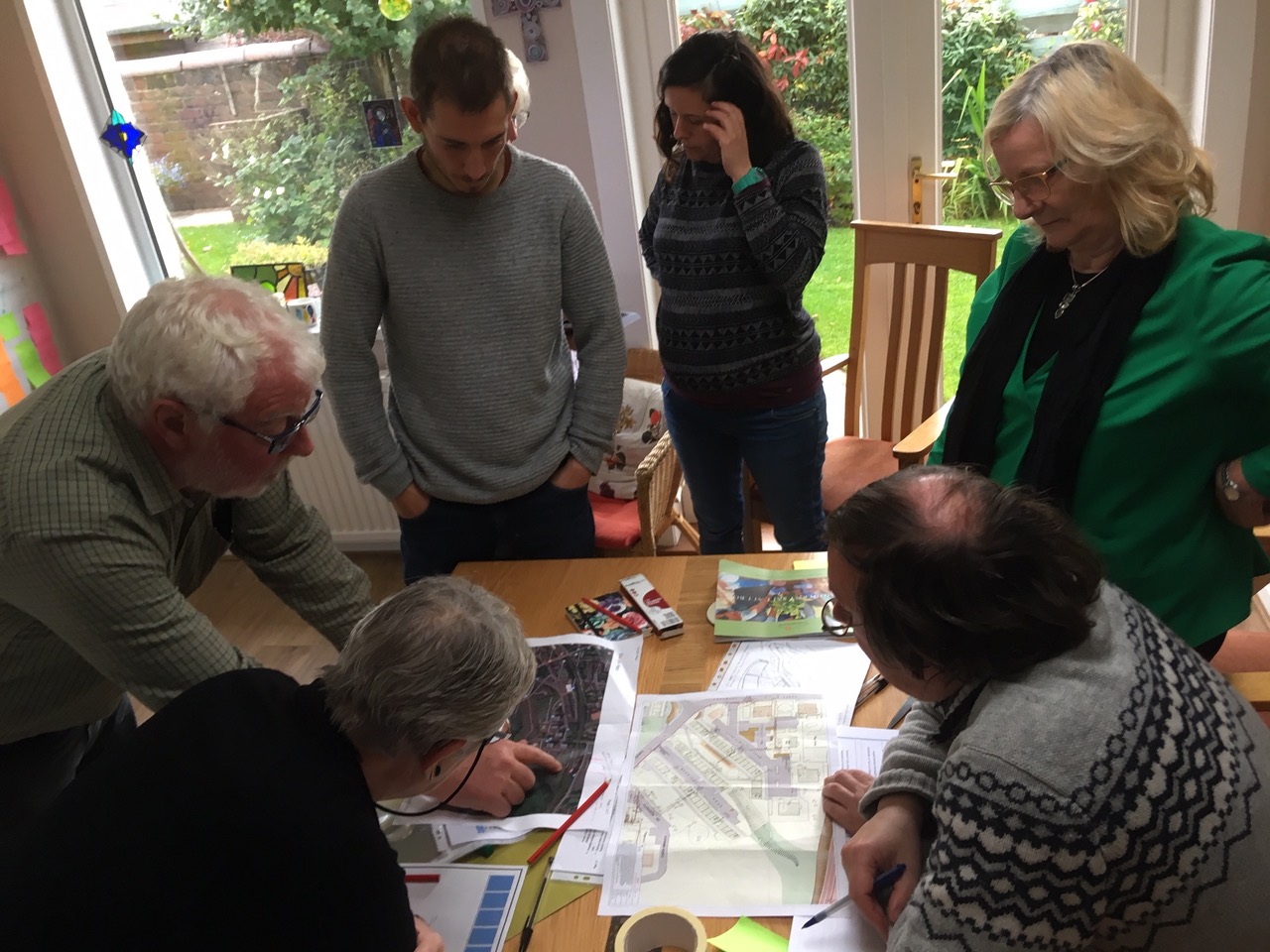
Alderley Edge Neighbourhood Planning Group (lead picture) – working to include Self-build and Custom Build in its Neighbourhood Plan.

The majority of groups will be using their time to support design and construction workshops, setting out the financial parameters around indicative site layouts and appraisals, and feasibility studies. Support will also be given around creating business plans and project briefs.
The Right to Build Task Force wants to encourage more cohousing, Community Land Trust and neighbourhood groups to consider it as vital source of help. Support is based on a consultancy approach, offered at a discount to community-led housing groups.

Still Green Cohousing
Still Green members exploring options at the Plot Shop in Bicester

How can the Right to Build Task Force help?

• Facilitating training events about Custom and Self Build housing and how to deliver it,
• Enabling neighbourhood planning initiatives, such as the preparation of planning policies and proposals to bring forward serviced building plots,
• General advice, such as understanding local demand, selecting suitable sites, preparing planning applications and sourcing professional services.

Alderley Edge Neighbourhood Group
Alderley Edge Steering Group

First steps for all community-led housing groups

Anyone looking to set up their own community-led housing group should first sign up to the Right to Build registers in the areas they are considering by visiting the Right to Build Portal: www.righttobuildportal.org
This is important to ensure that their group is known to their local authority and that it is willing and able to support the group in its search for suitable land.

The Right to Build registers are a vital tool as they give local authorities evidence of demand for custom homes locally, helping them to permission sufficient plots for those on the registers.
Mario Wolf, Director of the Right to Build Task Force, said, “The Right to Build Task Force is committed to working with more community-led housing groups. Custom or Self Build housing enables communities to build more affordable better designed homes for local people which suit their particular needs.

Plymouth Energy Community
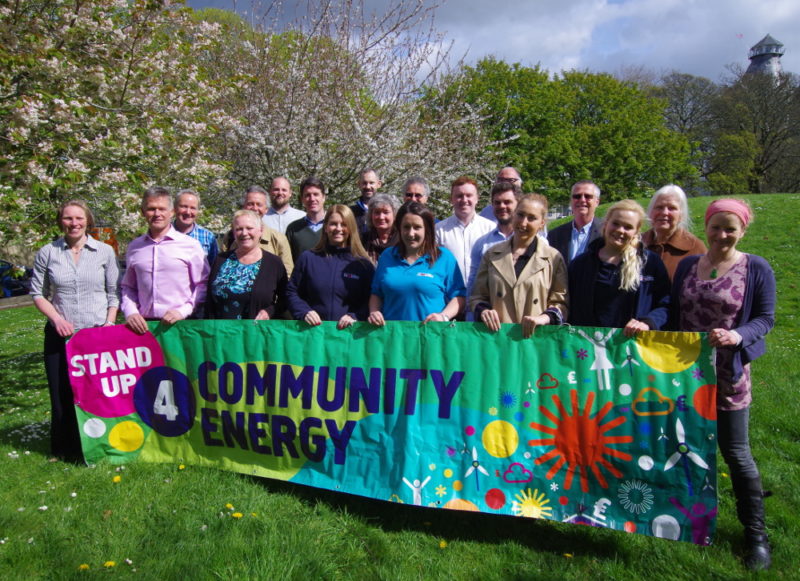
PEC board and team – Plymouth Energy Community aims to use community-led affordable housing to help reduce fuel poverty and carbon emissions.


“I would encourage all groups who think they could benefit from our help to contact us and urge them to sign up to their local Right to Build registers so that local authorities can take their needs into account when making land available through their plans and strategies.”

Dr Phil McGeevor, Vice Chair, UK Cohousing Network, said, “We are delighted that a further three cohousing groups are being supported by the Right to Build Task Force. It will assist them in the co-design of their future homes and their vision to create communities that address issues of neighbourliness and loneliness, as well as innovative and sustainable self-build ideas. We hope these will show the way for many other groups building intentional communities that will benefit their local area.”

First steps for all community-led housing groups

Anyone looking to set up their own community-led housing group should sign up to their Right to Build registers by visiting the Right to Build Portal.

Both the Community Land Trust Network and UK Cohousing can help with finding existing groups to sign up with, or with developing a new group.